


 6.30 MB
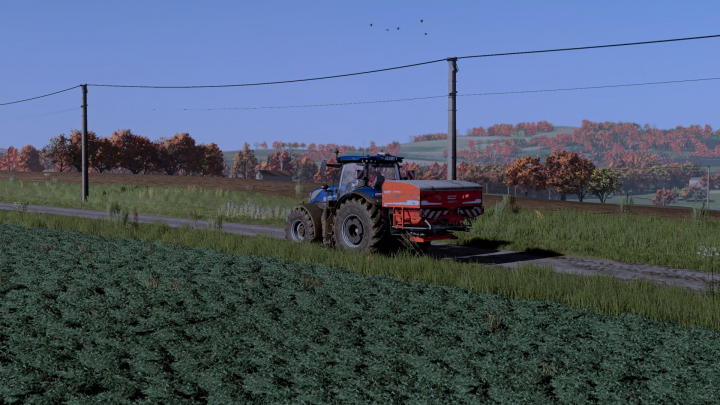

Realistic day/night shader V2.1


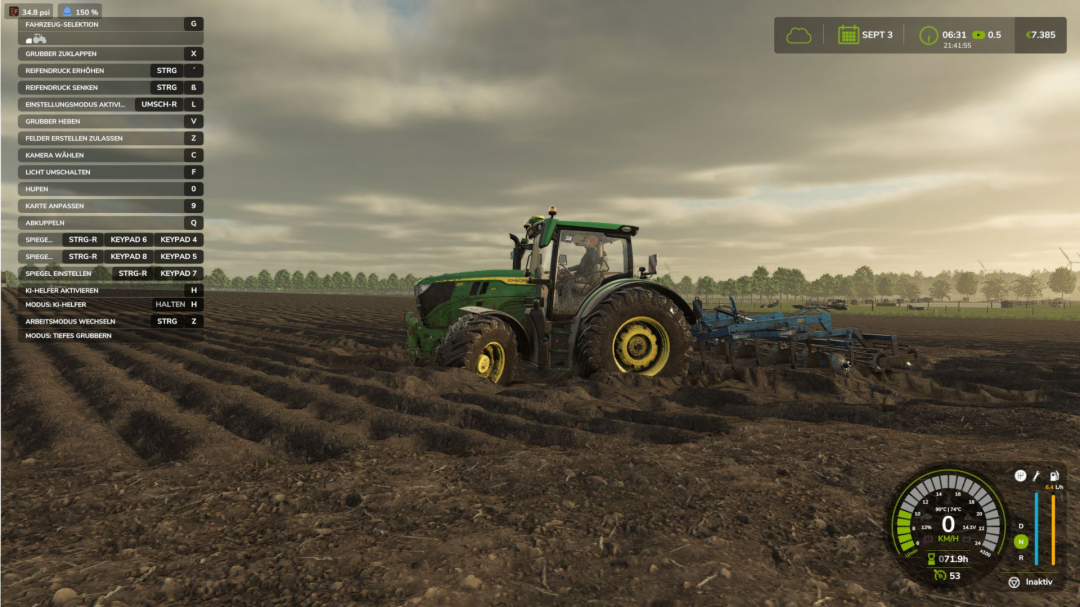
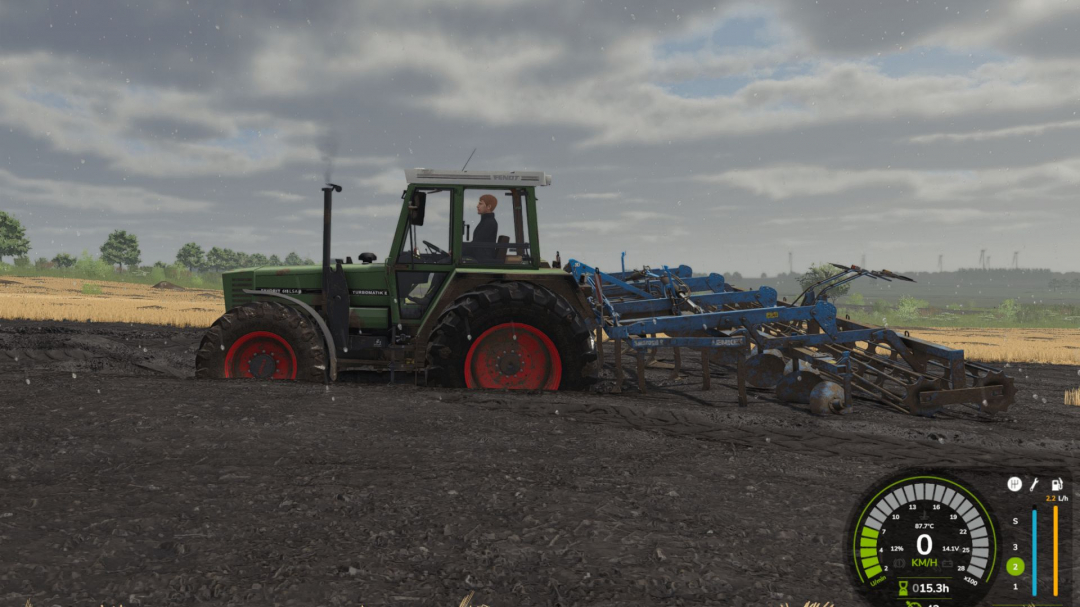
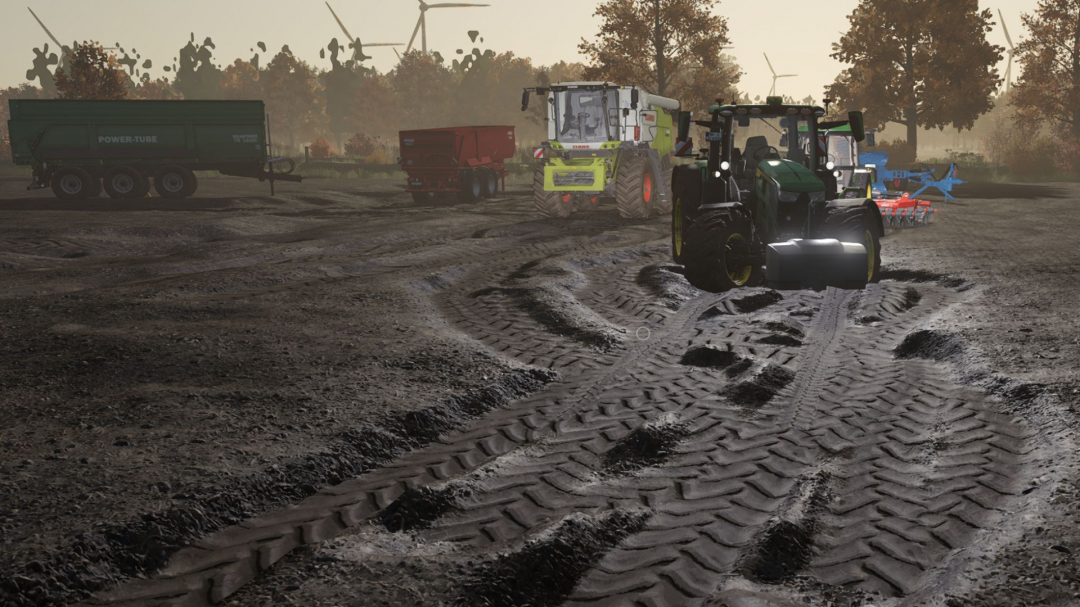
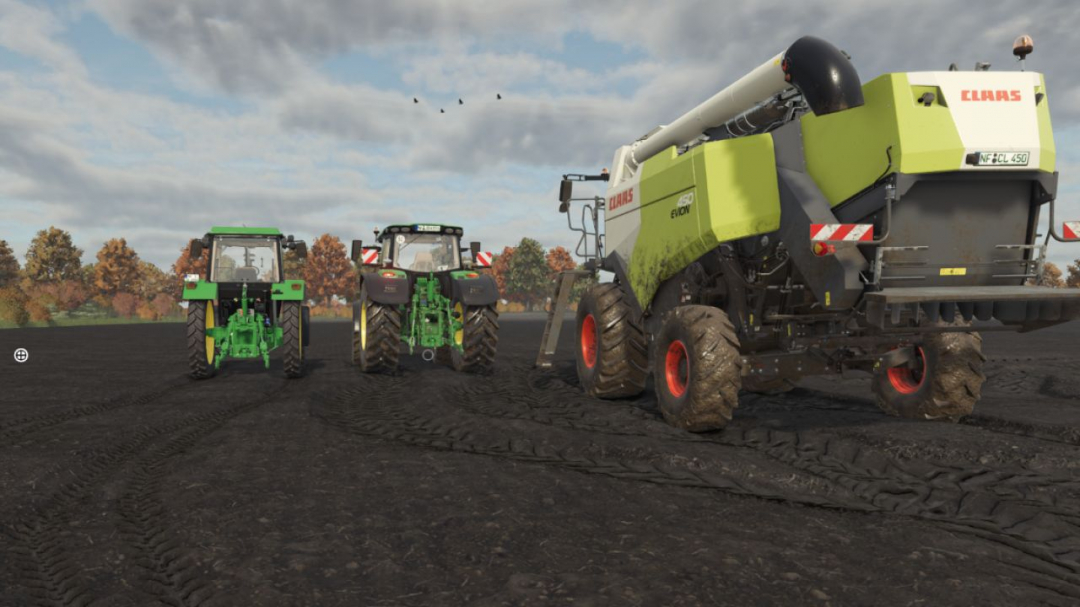
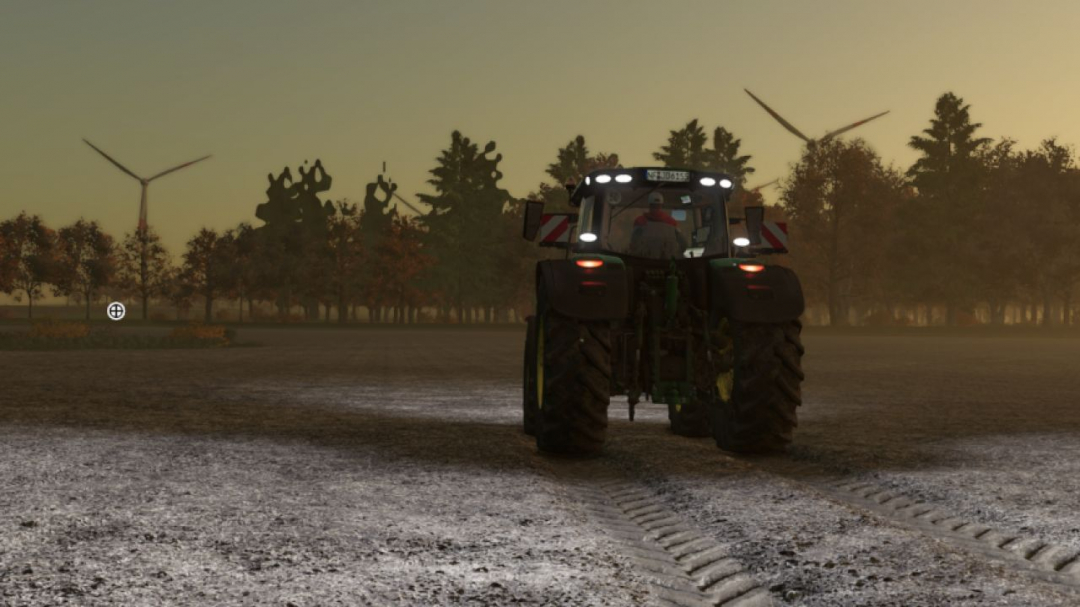
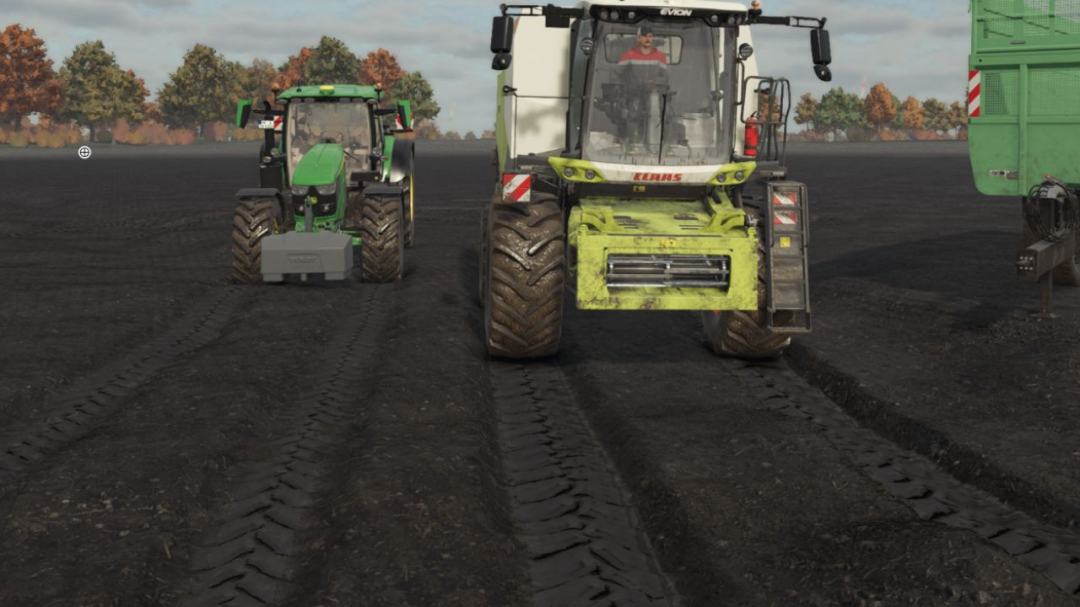
V1.3.7.6 Tire pressure display has been updated and prepared for future updates. Fixed Lua bugs. Visual Mud Tracks enhances Farming Simulator 25 with detailed lane, soil moisture, tire behavior, compaction, crop damage, root health, and bogging simulation. Vehicles now respond more realistically to dry, moist, and waterlogged soils. This mod supports both single player and multiplayer modes and integrates with the **Realistic Water & Soil Management System**. Soil moisture, load capacity, and waterlogging influence not only the display but also tire contamination, sinking, slippage, resistance, and plant damage. **Physical lanes and terrain grooves** Tires can permanently deform terrain, creating real grooves in the terrain heightmap. The depth and width are calculated individually for each wheel. **Considerations:** - Vehicle weight - Actual wheel load - Tire width and radius - Tire pressure - Soil moisture and saturation - Load capacity - Speed - Wheel slip - Cornering - Number of crossings - Trailers, levels, and attachments Left and right bike lanes remain separate. The vehicle's center is not unnecessarily lowered. Grooves have a narrow, steep cross-section to prevent large sink areas. Existing tracks can be deepened with additional crossings, with a maximum depth to prevent extreme terrain deformation. Grooves are created directly at the wheel contact point, with no delayed processing. Steered, mirror-mounted, and offset wheels are all considered. **Restoration through tillage** Physical grooves can be removed with appropriate tillage equipment. **Supported equipment includes:** - Plows - Cultivators - Disc harrows - Subsoilers - Mulchers - Reels - Seeders - Direct seeding machines - Planters The terrain is only reset within the current work area, removing visual traces and pending calculations. **Safe Terrain Journal** The mod uses separate save files: - `visualMudTracksTerrainBackup.xml` - `visualMudTracksActiveRuts.xml` - `visualMudTracksState.xml` The original terrain height is stored during the first intervention and preserved. Active grooves and recovery data are managed separately, allowing controlled resets and resumable restores. **Update notes:** Remove old lane data with tillage tools before updating to a newer version and save your progress. Existing grooves may remain if not properly removed. **Visible and physical sinking** Tires visibly and physically sink into soft, wet surfaces, modeled via wheel physics radius. The tires, suspension, and ground contact react together. Sinking occurs gradually, with wheels lifting out in a controlled manner on solid ground. **Sinking depth depends on:** - Soil moisture and saturation - Load capacity - Wheel load - Tire width and pressure - Speed - Slip - Existing track depth Wider tires distribute load better; narrower, heavily loaded tires cut deeper. **Tire pressure system** Tire pressure can be adjusted during operation. Values are saved per wheel and synchronized in multiplayer. **Low tire pressure:** - Increases contact area - Improves grip on soft ground - Reduces cutting - Eases extraction from soft tracks **High tire pressure:** - Decreases contact area - Increases cutting - Raises risk of getting stuck on wet terrain - May be more economical on hard surfaces A compact HUD displays current pressure in bar, color-coded for quick assessment. **Soil moisture HUD and RWSM connection** The Soil Moisture HUD shows the current RWSM topsoil value in percent, matching the field info. Values over 100% indicate severe waterlogging. **Impacts of RWSM soil moisture:** - Sludge content - Tire contamination - Particle effects - Load capacity - Sinking depth - Tire grip - Wheel slip - Groove depth - Risk of getting stuck - Crop and root damage Irrigation-induced soil moisture increases can alter soil physics. **Tire dirt and mud** Mud accumulation is stored per tire. Tires stay dirty after leaving the field and clean based on surface type: - Asphalt cleans quickly - Gravel cleans slower - Dirt roads only slightly - High speeds fling mud out of treads - Rain washes off tires - A light film may remain Particle effects differentiate dry earth from wet mud: - Fine dry particles - Medium dry particles - Fine wet splashes - Medium mud particles - Heavy mud lumps Particle quantity depends on wheel rotation, slip, width, radius, moisture, sink factor, and load. Particles are only generated with proper ground contact. **Progressive stuck physics** On waterlogged or unstable ground, vehicles can progressively become stuck. Continuous slippage causes wheels to dig in further, reducing grip and increasing resistance. **Factors to consider:** - Soil moisture and saturation - Load capacity - Wheel load - Tire pressure - Slip - Speed - Engine load and RPM - Towing forces - Resistance and duration of exposure Different implements (plows, cultivators, harrows, subsoilers, seed drills, rollers) produce varying resistance based on width and depth. In extreme cases, propulsion can be nearly lost. Lifting or uncoupling tools reduces load, and controlled reversing can free the vehicle. **Soil compaction** Vehicles compact topsoil and subsoil depending on load, moisture, slip, and passes. **Includes:** - Topsoil compaction - Subsoil compaction - Stronger compaction in wet soil - Multiple passes - Additional load from cornering and slipping - Plow sole effects - Effects of different implements - Rolling for reconsolidation - Slow biological recovery Soil structure and compaction are visible in the field info. **Fruit destruction** Plants in tire areas may be damaged or destroyed, using native LS25 fruit destruction mechanics. **Damage factors:** - Wheel load - Tire width - Soil moisture - Slip - Cornering - Growth stage - Root health - Soil structure - Number of crossings Young plants are more sensitive. Repeated crossings increase damage. Regular tires tend to remove plants over time; maintenance tires reduce but do not eliminate damage. **Root health** Each soil cell can have an individual root health value. **Root damage occurs due to:** - High wheel load - Wet ground - Slip - Cornering - Multiple crossings - Unfavorable growth stages - Soil compaction Declining root health increases plant damage risk: - Below 70%: sensitivity increases - Below 40%: damage occurs more quickly - Below 20%: high failure risk Root health recovers biologically over time. **Field info and settings menu** The mod extends field info to include: - Soil compaction - Underbody status - Root health - Soil structure - Sink factor - Load capacity - Fruit and root damage The settings menu offers detailed explanations of options, interactions, performance impacts, and save effects. Menu texts are available in twelve languages: German, English, French, Spanish, Italian, Dutch, Polish, Portuguese, Russian, Czech, Hungarian, and Turkish. **Multiplayer and performance** Physics calculations run on the server. Tire pressure, contamination, and soil conditions are synchronized. To optimize performance, the mod uses: - Limited groove points - Adjustable storage intervals - Event and bulk caches - Sleeping floor cells - Reduced refresh rates for inactive areas - Delayed initialization of particle systems - Clean removal of particle effects when vehicles are deleted **Required mods:** Realistic Water & Soil Management (RWSM)
Comments:
Login to place a comment: Login