


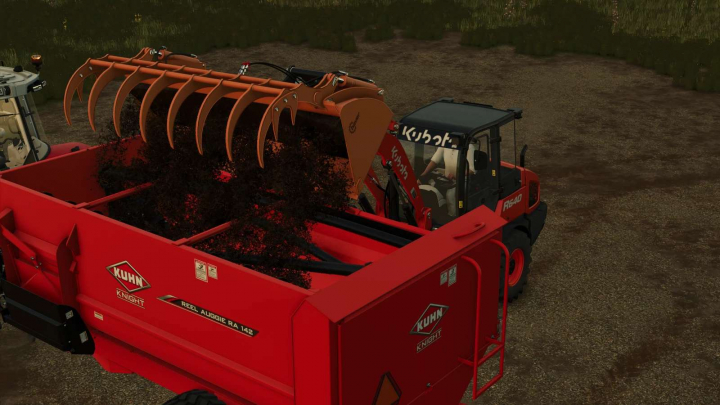

Hauer SGS2600 v1.0


3
Your rating:
Sherman200
 9.23 MB
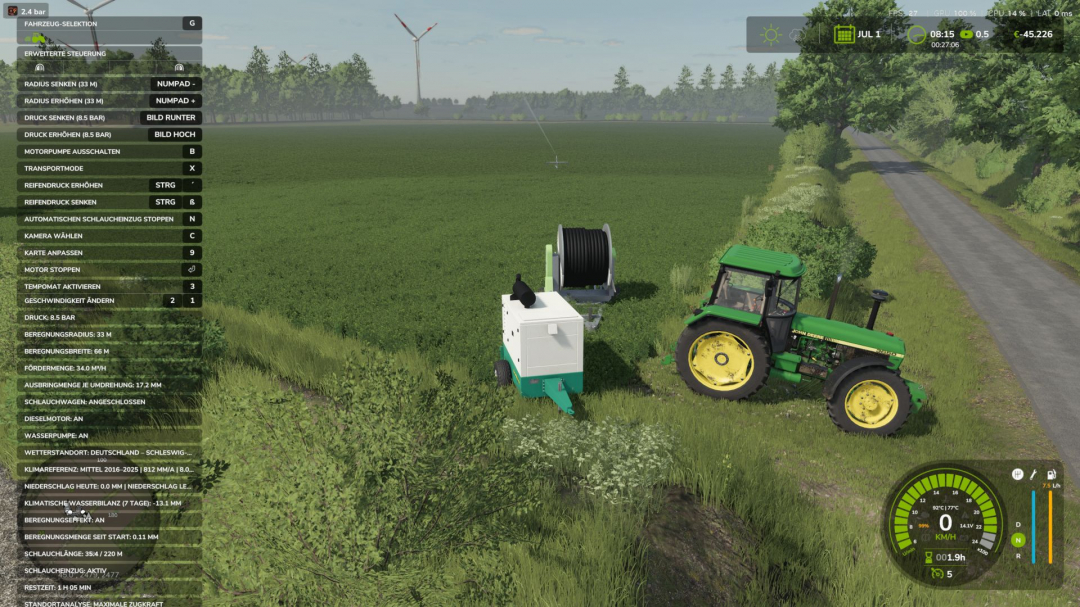
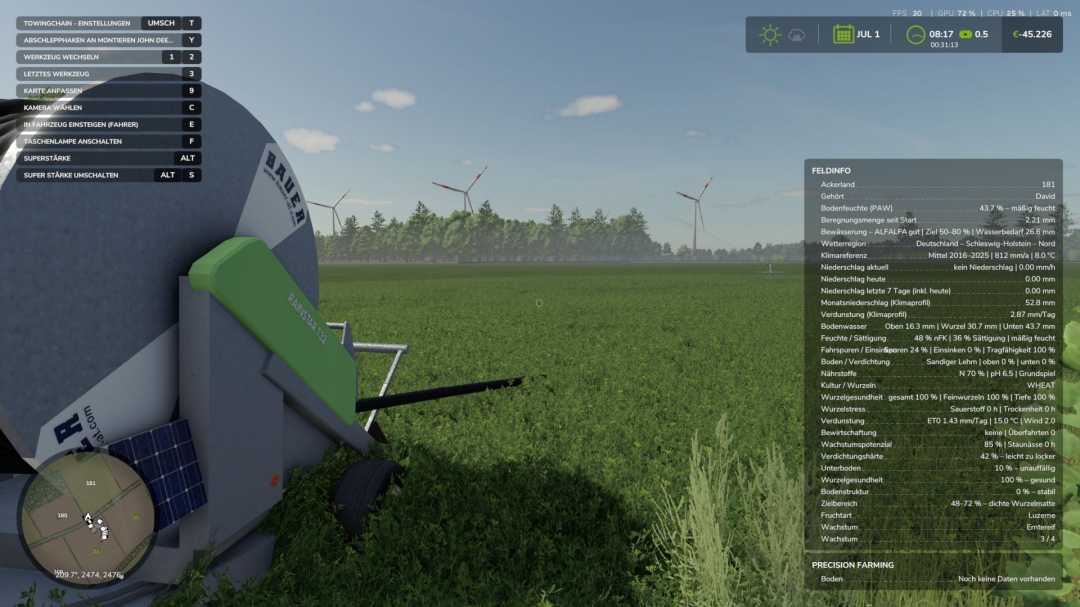
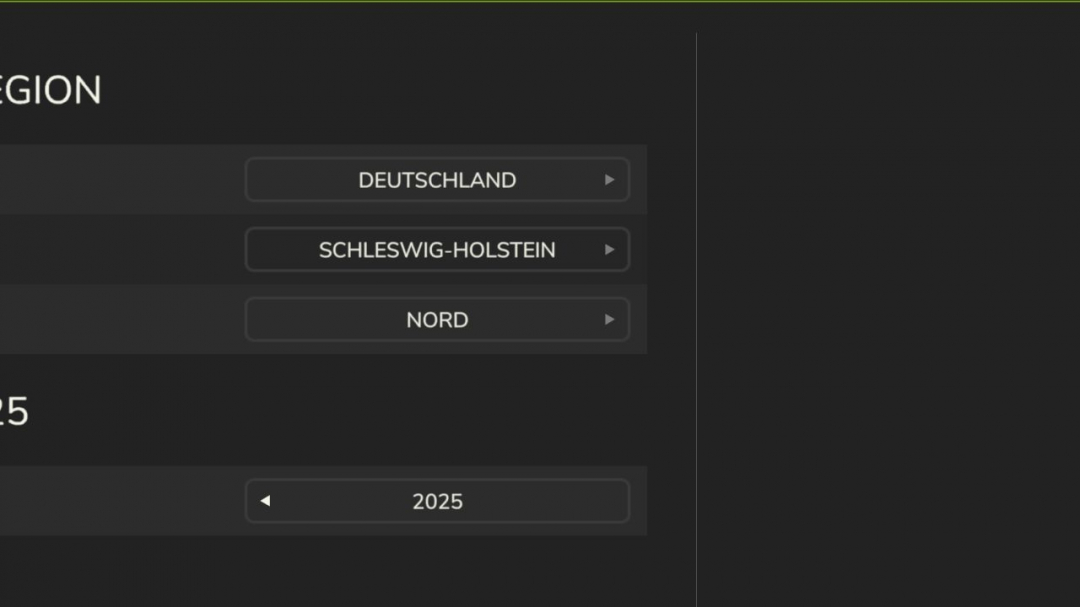
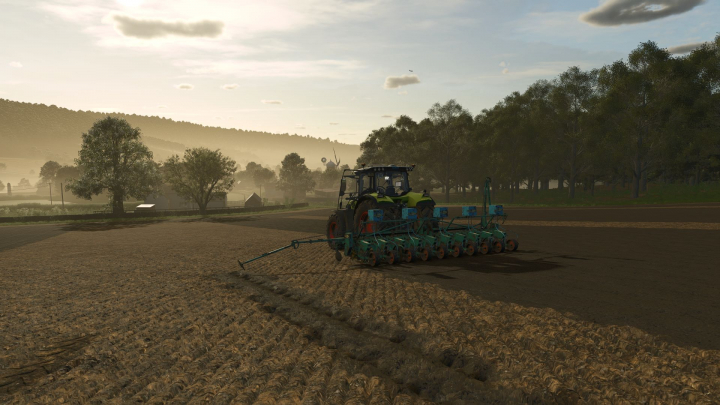
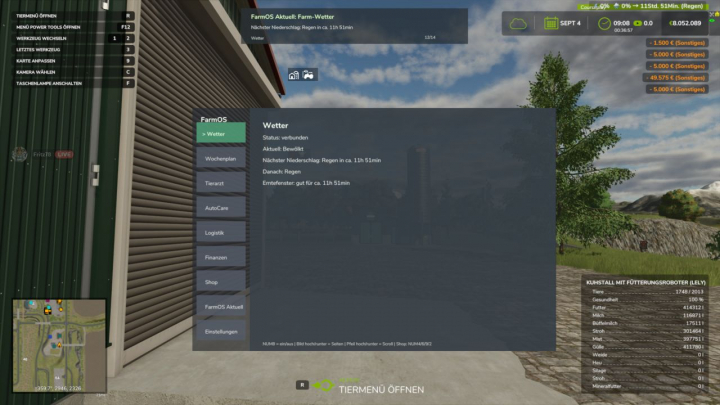
Realistic Water & Soil Management expands Farming Simulator 25 with a comprehensive simulation of weather, soil water, irrigation, soil compaction, plant roots, weed competition, and yield development. The values are calculated locally for individual soil areas, creating different conditions within a single field: one area can be dry and stable, while another suffers from waterlogging, compaction, or repeated passes. Weather and regional climate data are integrated, supplementing the game weather with real climate and precipitation profiles from the last 10 years across 39 countries, including all 16 German federal states with regional subdivisions. Precipitation types such as rain, thunderstorms, snow, hail, and their water equivalents are recognized, and precipitation is continuously stored and incorporated into the soil water balance. The multi-layer soil water balance divides the soil into three layers: topsoil (0-10 cm), root zone (10-30 cm), and underbody (30-60 cm). Water availability, saturation, infiltration, drainage, evaporation, seepage, and waterlogging are calculated for each layer, with plant-available water and physical saturation represented as separate values. A soil moisture content exceeding 100% does not automatically mean saturation. Different soil types are distinguished, including loamy sand, sandy loam, clay, and silty clay, each with specific values for field capacity, wilting point, saturation, infiltration, drainage, compaction sensitivity, mud line, and bearing capacity. Light soils dry faster, while heavy soils retain more water but are more prone to waterlogging and compaction. The Bauer Rainstar T32 features include a hose length of up to 220 meters, a movable sprinkler cart, automatic hose retraction, automatic parking brake, pivoting irrigation sector, realistic water jet and spray, visible impact effects on the ground, adjustable pump pressure and irrigation radius, and calculated application rates. Pump pressure can be adjusted from 3.5 to 11.0 bar, with a radius between 27 and 38 meters, influencing flow, jet width, water distribution, and motor speed. The system moves at approximately 42 meters per hour, with the hose reel largely stationary during retraction. The diesel pump has a 450-liter tank, consuming about 5 liters of diesel per hour under high load, requiring regular refueling. Water is sourced from groundwater, available in unlimited quantities, with the internal water level automatically managed. The engine and water pump operate separately, with engine sounds varying based on load and pump activity. Connection aids with visual markers and indicators assist in proper setup. Water applied through irrigation is distributed across topsoil, root zone, and subsoil, considering pressure, radius, flow, soil type, saturation, and infiltration ability. Excess water can cause runoff, poor trafficability, waterlogging, root damage, and mud. The system recognizes numerous crops, including wheat, barley, oats, corn, canola, sunflower, soybeans, potatoes, sugar beets, grass, alfalfa, sorghum, cotton, sugar cane, rice, peas, beans, spinach, carrots, parsnips, and beets. For each, optimal moisture ranges, drought and waterlogging sensitivity, root depth, nitrogen needs, pH range, compaction sensitivity, and temperature limits are considered. Root health is simulated for main roots, fine roots, and usable root depth. Damage occurs due to waterlogging, oxygen deficiency, extreme dryness, top and subsoil compaction, deep lanes, repeated crossings, high wheel loads, and wet ground. Fine roots respond faster and more strongly, with recovery depending on moisture, compaction, drainage, and temperature conditions. No roots are simulated in uncultivated areas. Vehicle traffic impacts soil compaction, tracked by contact points, influenced by vehicle weight, wheel load, tire width, ground pressure, slip, speed, soil moisture, and passes. Calculations include topsoil and subsoil compaction, track depth, carrying capacity, sink factor, trafficability, and potential root damage. On dry ground, effects are minimal; on wet or already compacted soil, damage increases significantly. RWSM detects tillage activities such as plowing, cultivating, disc harrowing, subsoiling, sowing, rolling, fertilizing, and vehicle traffic. Proper timing and moisture conditions are essential to avoid structural damage or ineffective loosening. Rolling after sowing can help reconsolidate soil but may increase compaction on wet soil. Soil conditions are graded from dry to extremely muddy, based on local moisture, saturation, soil type, bearing capacity, and track depth. Damp ground initially causes a film of moisture or soil on tires; heavy mud occurs with high saturation, reducing load capacity and causing sinking. The Water-Soil API enables compatibility with mods like Visual Mud Tracks, combining ground condition data with tire visuals. Living weeds compete for water and nutrients, affecting crop growth depending on weed strength, coverage, crop type, growth stage, and soil moisture. Young crops such as corn, potatoes, beets, and vegetables are especially sensitive. Weed control measures automatically stop additional water consumption. Weed impact on yield is factored into the overall calculation. Actual yield depends on server-side factors, including soil moisture, drought and waterlogging stress, root health, compaction, weed competition, nitrogen, pH, temperature, evaporation, plant type, growth stage, and soil history. The yield factor varies between approximately 28% and 103%, affecting only the harvested amount, not the harvested area. Compatibility with precision farming is detected automatically, allowing adoption of nitrogen, pH, soil data, and yield potential. RWSM adjusts their weighting to prevent double penalization when precision farming features are active. The basic formula is: Basic game or PF yield × RWSM soil factor = actual yield. RWSM visualizes plant development stages, highlighting local differences. Water stress, root damage, compaction, and yield potential can cause plants to appear smaller or less developed in specific areas, while harvest-ready stocks remain fully harvestable. Savegame and multiplayer data include soil water levels, rainfall, irrigation history, compaction, root health, weed pressure, earnings, edit history, traffic crossings, pump settings, and selected weather regions. Calculations are server-authoritative, optimized for multiplayer. The Water-Soil API offers a versioned interface for other mods to query soil type, moisture, saturation, trafficability, load capacity, sink factor, compaction, track depth, root health, tire moisture, mud levels, and recommended tire pressure. Current user interface features in version 1.33.1 include disabled map overlay, additional field info window, and FieldPhone, while weather, soil, root, weed, irrigation, and yield calculations continue running in the background. Special thanks to JD Power and da-hoffick for providing the 3D model of the Rainstar. Required mods include Precision Farming and Visual Mud Tracks.
Comments:
Login to place a comment: Login